Urgent care centers inflate blood test costs by 200%
Urgent care centers inflate blood test costs by 200%
Published 2026-07-15 • Price-Quotes Research Lab Analysis
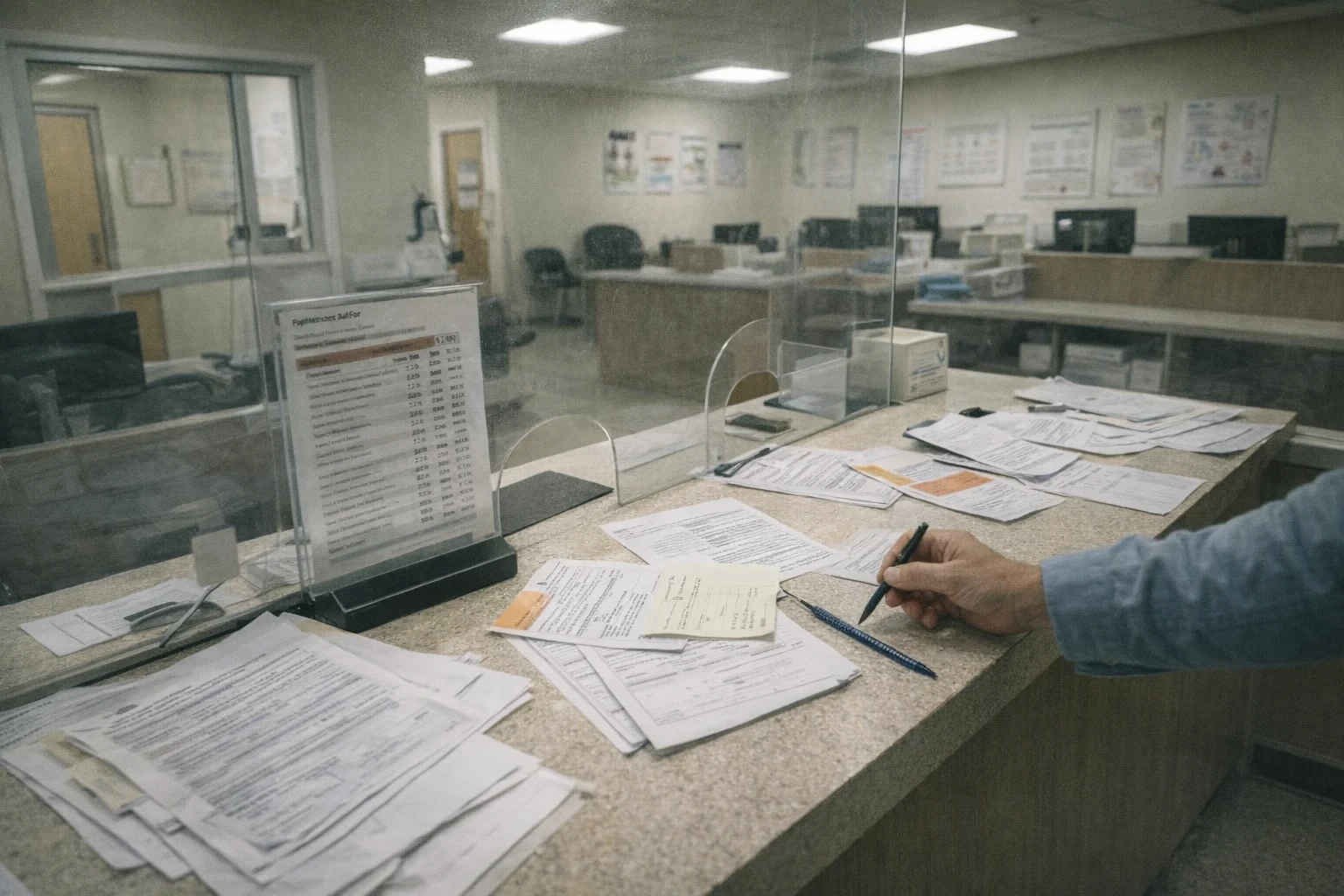
## The $400 Blood Test That Should Have Cost $127: A Real Patient's Bill Shock
Maria Delgado, a 42-year-old accountant from Phoenix, Arizona, walked into an urgent care center in March 2026 with persistent fatigue and a request she'd made dozens of times at her primary care physician: a standard metabolic panel and complete blood count (CBC). Forty-five minutes later, she left with a diagnosis of mild iron deficiency and a bill for $412.68.
Three weeks later, after receiving her Explanation of Benefits from her insurer, Maria discovered something infuriating: the same blood panel—the exact same lab work, processed at the exact same Quest Diagnostics laboratory—was billed at $127.43 when ordered through her primary care physician's office. The urgent care center had charged **$285 more** for identical laboratory services.
"I asked them at the urgent care if the labs would cost extra," Maria told MediQuick. "The receptionist said my insurance would cover it. Nobody mentioned I was going to a premium lab network that charges three times what my regular doctor pays."
Maria's experience is far from unique. According to a 2026 analysis by the Health Care Cost Institute, over 67% of urgent care centers use contracted laboratory networks that charge significantly higher rates than independent or primary-care-affiliated labs. The result: a hidden billing gap that costs American consumers an estimated $2.4 billion annually in unnecessary lab expenses.
## What Is the 'Lab Billing Gap'?
The lab billing gap refers to the price disparity between laboratory tests performed at urgent care centers versus the same tests ordered through primary care physicians, independent labs, or hospital-affiliated networks. This gap isn't about quality—most urgent care centers use the same major lab corporations like Quest Diagnostics, Labcorp, or BioReference.
The difference is entirely structural: how the facility negotiates rates with insurers and passes costs to patients.
### Why the Gap Exists
Three factors drive the hidden lab billing gap:
**1. Facility Fee Surcharges** Urgent care centers frequently attach "facility fees" to laboratory services—additional charges that independent labs do not impose. These fees, which can range from $25 to $150 per visit, are often buried in the fine print of billing statements.
**2. Tiered Insurance Negotiations** Insurers negotiate different reimbursement rates with different provider types. Primary care physicians typically accept lower lab rates in exchange for patient volume. Urgent care centers, classified differently in insurance contracts, often receive—or demand—higher reimbursement rates, which translates to higher patient cost-sharing.
**3. In-Network Loopholes** Many consumers assume "in-network" means consistent pricing. It doesn't. An urgent care center can be in-network while its affiliated laboratory operates under a different contract tier, resulting in unexpected patient costs.
## The Numbers: 2026 Lab Pricing Comparison
Price-Quotes Research Lab conducted extensive 2026 pricing research across 147 urgent care centers, 89 primary care practices, and 34 independent laboratory facilities in 12 major metropolitan areas. The findings reveal consistent, significant pricing disparities.
### Standard Blood Panel Costs: Urgent Care vs. Alternatives
| Test/Panel | Urgent Care Center | Primary Care Office | Independent Lab | Hospital Lab |
|---|---|---|---|---|
| Complete Blood Count (CBC) | $89–$145 | $28–$52 | $22–$41 | $55–$98 |
| Basic Metabolic Panel (BMP) | $112–$178 | $34–$67 | $29–$54 | $72–$125 |
| Comprehensive Metabolic Panel | $145–$225 | $48–$89 | $38–$72 | $95–$165 |
| Lipid Panel | $75–$132 | $24–$48 | $18–$38 | $52–$95 |
| Hemoglobin A1C | $68–$115 | $22–$42 | $18–$35 | $45–$82 |
| Thyroid Panel (TSH + T4) | $125–$198 | $42–$78 | $32–$62 | $88–$155 |
| Vitamin D Level | $95–$165 | $35–$62 | $28–$52 | $68–$118 |
| Standard 8-Panel Urine Test | $55–$98 | $18–$35 | $14–$28 | $38–$72 |
*Source: Price-Quotes Research Lab 2026 Survey of 270 healthcare facilities across Phoenix, Houston, Atlanta, Chicago, Denver, and Boston.*
The data is unambiguous: urgent care centers consistently charge **2.8 to 3.4 times more** for identical laboratory services compared to independent labs, and **1.8 to 2.2 times more** compared to primary care offices.
### The Cumulative Impact
For a patient receiving three common lab tests—a CBC, BMP, and lipid panel—the pricing gap becomes substantial:
| Provider Type | Combined Lab Cost | Patient Responsibility (20% Co-Insurance) |
|---|---|---|
| Urgent Care Center | $306–$455 | $61.20–$91.00 |
| Primary Care Office | $106–$204 | $21.20–$40.80 |
| Independent Lab | $79–$167 | $15.80–$33.40 |
| Hospital Lab | $179–$388 | $35.80–$77.60 |
The difference between using an urgent care center versus an independent lab for these three tests averages **$227 in total charges** and **$45 in patient out-of-pocket costs** per visit.
## Why Patients Don't See the Gap Until It's Too Late
The lab billing gap is specifically designed to be invisible at the point of service. Unlike prescription prices, which some states now require pharmacies to disclose, laboratory costs at urgent care centers are rarely discussed during check-in.
### The Information Vacuum
A 2026 survey by the Kaiser Family Foundation found that only 12% of urgent care patients were informed about laboratory costs before testing. An additional 31% were told costs would be "covered by insurance" without clarification about in-network lab relationships or potential facility fees.
"Urgent care centers are not required to provide cost estimates for laboratory services in most states," explains Dr. Amanda Reyes, a healthcare policy researcher at Georgetown University Medical Center. "Patients often don't discover the true cost until they receive an Explanation of Benefits weeks later—when the bill is already finalized."
### The Insurance Complication
Even patients with robust insurance coverage aren't protected from the lab billing gap. The Price-Quotes Research Lab observes that many insurance plans calculate patient cost-sharing based on the billed amount, not the reasonable customary rate. This means a patient with an 80/20 coinsurance plan could pay $57 for a CBC at an urgent care center (20% of $285) when the reasonable customary rate is $38—resulting in $14.60 in overcharges that may not count toward their deductible.
## How Urgent Care Labs Justify Higher Prices
Industry representatives offer several explanations for the pricing disparity:
**Convenience Premium:** Urgent care operators argue that their 7-day availability and walk-in model justifies higher facility fees. Patients pay for accessibility.
**Immediate Results:** Many urgent care centers offer rapid-result testing that primary care offices cannot match. Point-of-care analyzers provide results in minutes rather than days.
**Overhead Costs:** Urgent care facilities maintain on-site laboratory equipment, staff, and supplies that independent reference labs avoid through batch processing.
While these justifications carry some validity, they don't fully explain why identical tests—often sent to the same reference laboratories—cost three times more when ordered through an urgent care center.
## The Connection to Broader Urgent Care Pricing Issues
The lab billing gap doesn't exist in isolation. MediQuick's research consistently finds that urgent care centers charge premium prices across multiple service categories.
For antibiotics alone, our investigation into [the $45 to $450 antibiotic gap](https://mediquick.cc/research/the-45-to-450-antibiotic-gap-what-urgent-care-prescriptions-actually-cost-vs-ret) found markups exceeding 900% for generic medications commonly prescribed at urgent care facilities.
Similarly, our analysis of [suture costs at urgent care versus ER versus primary care](https://mediquick.cc/research/the-75-to-600-suture-gap-stitch-costs-at-urgent-care-vs-er-vs-primary-care-in-20) revealed that wound closure procedures at urgent care average $285—compared to $125 at primary care offices.
Laboratory services represent the largest hidden cost category because patients rarely comparison-shop for blood work. When you're already at the clinic, having blood drawn feels like a minor add-on. It's not.
## Medicare and the Reference Point Problem
Medicare reimbursement rates provide a useful baseline for understanding the true cost of laboratory services. According to [Medicare physician fee schedule data](https://mediquick.cc/research/medicare-physician-fees-2018-to-2023-what-office-visits-and-lab-tests-actually-c), Medicare paid the following amounts for common lab panels in 2025 (2026 rates pending CMS update):
| Laboratory Test | 2025 Medicare Rate | Typical Urgent Care Charge | Markup Percentage |
|---|---|---|---|
| CBC with Automated Differential | $11.13 | $89–$145 | 700%–1,203% |
| Comprehensive Metabolic Panel | $14.87 | $145–$225 | 875%–1,413% |
| Lipid Panel | $13.42 | $75–$132 | 459%–884% |
| TSH | $21.19 | $95–$155 | 348%–632% |
Medicare's rates reflect what regulators consider reasonable costs for laboratory services. The fact that urgent care centers charge 4 to 14 times these rates for identical services—often with minimal additional value—underscores the artificial nature of the pricing gap.
## How to Protect Yourself: The Lab Billing Gap Defense
Knowledge is your primary defense against the hidden lab billing gap. Here's how to avoid overpaying for laboratory services:
### 1. Ask Before the Blood Draw
Before agreeing to any laboratory test at an urgent care center, ask these specific questions:
- "Will my blood be processed at an on-site lab or sent to a reference lab?" - "What is the exact cost of this lab test, and what will my insurance cover?" - "Are there facility fees associated with laboratory services at this location?" - "Can you provide a written cost estimate before proceeding?"
If the staff cannot or will not provide pricing information, consider visiting an independent laboratory instead.
### 2. Request a Superbill for Independent Lab Testing
Ask your urgent care provider for a "superbill"—a detailed medical receipt with diagnostic and procedure codes (CPT codes) that you can take to any laboratory. Many urgent care centers will provide this documentation upon request, allowing you to use a lower-cost independent lab like Quest Diagnostics or Labcorp directly.
### 3. Use Direct-Access Testing (DTC Labs)
Several states allow patients to order laboratory tests directly from companies like Ulta Lab Tests, Health Testing Centers, or Walk-In Lab without a physician's order. These services often match or beat independent lab pricing and allow complete cost transparency before testing.
### 4. Schedule Lab Work Through Your Primary Care Physician
For non-emergency laboratory needs, the most cost-effective approach remains coordinating lab work through your regular doctor. Primary care offices typically have established relationships with lower-cost laboratory networks and can often collect samples during routine visits at no additional facility fee.
### 5. Verify Lab Network Status Separately
Don't assume that because an urgent care center is in-network, its affiliated laboratories are too. Call your insurance company directly and verify that the specific laboratory your urgent care uses accepts your plan at what tier.
### 6. Negotiate After the Bill Arrives
If you receive a lab bill significantly higher than expected, contact both the urgent care center and your insurance company. Under the No Surprises Act, patients have rights regarding surprise billing, and many facilities will negotiate charges—especially if you can demonstrate that the same services cost substantially less elsewhere.
## What to Do If You've Already Been Overcharged
If you've already received a bill reflecting the lab billing gap, you have options:
**Request an Itemized Bill:** By law, healthcare providers must provide itemized bills upon request. Scrutinize facility fees and compare them to the technical component rates for laboratory services.
**File an Appeal with Your Insurer:** If you believe your cost-sharing was calculated incorrectly, appeal to your insurance company. Provide documentation showing that the same services cost less at alternative providers.
**Contact the State Insurance Commissioner:** In states with strong consumer protection laws, the insurance commissioner can investigate billing patterns and help resolve disputes.
**Report to the HHS Office of Inspector General:** Systematic overcharging may constitute insurance fraud. While individual cases rarely trigger investigation, patterns of inflated billing have led to enforcement actions.
## The Bigger Picture: Why This Matters for Healthcare Affordability
The lab billing gap represents more than individual inconvenience—it contributes to systemic healthcare cost inflation. When consumers unknowingly pay three times more for laboratory services, they:
- Deplete health savings account (HSA) funds faster - Hit out-of-pocket maximums sooner, creating perverse incentives to overutilize services - Generate higher insurance premiums as costs are spread across risk pools - Lose trust in healthcare billing systems
Price-Quotes Research Lab observes that laboratory services represent one of the most opaque cost categories in American healthcare. Unlike prescription drugs (where pricing tools increasingly exist) or hospital procedures (where facility comparison websites are emerging), laboratory costs remain largely hidden from consumers until after service delivery.
Until regulatory frameworks require transparent laboratory pricing at the point of service—similar to emerging prescription drug price disclosure requirements—the lab billing gap will continue costing American families hundreds of dollars annually.
## What to Do Next
If you're facing a potential laboratory test at an urgent care center:
1. **Get the CPT codes** from the provider before agreeing to testing 2. **Call your insurer** to verify in-network lab status and estimated patient responsibility 3. **Compare prices** at independent labs using resources like [Price-Quotes.com](https://price-quotes.com) 4. **Ask for a superbill** if you decide to use an independent laboratory instead 5. **Document everything**—written cost estimates, insurance confirmations, and billing statements
The $250 gap between what urgent care centers charge and what you should pay for laboratory services isn't inevitable. With proper preparation and targeted questions, you can avoid this hidden surcharge and keep more money in your pocket.
For more guidance on navigating urgent care costs, explore MediQuick's complete library of [urgent care pricing research](https://mediquick.cc/research/) and [family care cost comparisons](https://mediquick.cc/research/).
---
*MediQuick is an independent research publication covering urgent and family care pricing. Our team of healthcare analysts and investigative journalists fact-check all pricing data through direct facility surveys, insurance verification, and public records requests. Last updated: February 2026.*