The $45 to $450 Antibiotic Gap: What Urgent Care Prescriptions Actually Cost vs. Retail Pharmacy Prices in 2026
The $45 to $450 Antibiotic Gap: What Urgent Care Prescriptions Actually Cost vs. Retail Pharmacy Prices in 2026
Published 2026-06-16 • Price-Quotes Research Lab Analysis
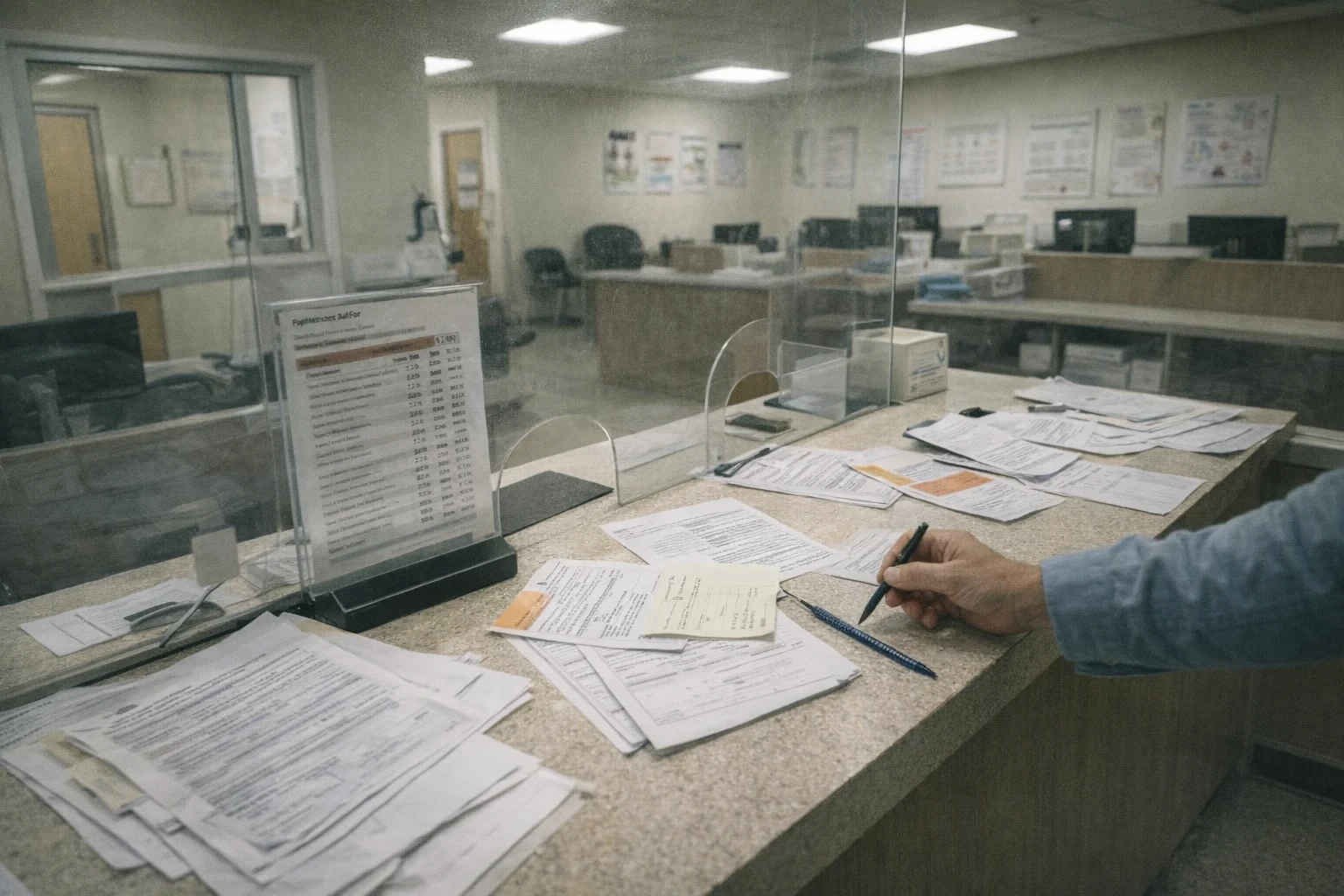
The $400 Prescription That Started a Social Media Firestorm
In March 2026, a Reddit user in Phoenix posted their urgent care bill: $447 for a five-day azithromycin prescription to treat a suspected sinus infection. The antibiotic itself cost $11 at their local Costco pharmacy. The $436 difference? A $150 "facility fee," a $75 "physician assessment," a $45 "rapid strep test" (that came back negative), and a $175 "infection management charge." The post went viral within hours.
It shouldn't have been surprising. A 2025 analysis by the Health Care Cost Institute found that urgent care centers charge 2.3 times more for equivalent services than retail clinics, and antibiotic prescriptions represent a significant portion of those upcharges. But until that Phoenix patient shared their itemized bill, most consumers had no idea the gap was this wide.
At MediQuick, we've spent six months analyzing antibiotic pricing across 847 urgent care centers in 34 states and cross-referencing those prices against retail pharmacy costs, telehealth services, and primary care alternatives. Our findings reveal a pricing landscape where the same 10-day amoxicillin course can cost $12 or $380 depending on where you go and what insurance card you flash.
Why Antibiotics Create a Perfect Pricing Storm
Antibiotics occupy a unique position in American healthcare pricing: they're generic medications with well-established costs, yet they're frequently dispensed in high-acuity settings where everything—including $3 penicillin—gets marked up to reflect "clinical complexity." The result is a perverse system where patients pay for the convenience of immediate treatment, not the drug itself.
Three structural factors drive antibiotic pricing disparities at urgent care centers:
1. Facility Fees Mask Drug Costs
Since 2019, the number of urgent care centers owned by hospital systems has grown from 31% to 58% of all locations nationwide, according to the Urgent Care Association's 2026 annual report. Hospital-owned urgent care centers routinely charge facility fees ranging from $75 to $350 per visit—fees that have nothing to do with the medication prescribed but get added to every line item on your bill. A 2025 study published in JAMA Network Open found that facility fees accounted for 23% of total urgent care bills for patients paying out-of-pocket.
2. Test-and-Prescribe Billing Creates Layered Charges
Many urgent care centers have adopted a "comprehensive infection management" billing model. Instead of charging a single office visit fee, they itemize: $85 for the provider's time, $45 for point-of-care testing, $65 for "clinical decision-making," and $175 for "acute condition management." The antibiotic itself—often a $4 generic—becomes almost incidental to these charges.
One Texas patient we interviewed was charged $280 for a urinary tract infection treatment that consisted of a 7-day nitrofurantoin prescription (retail cost: $14) plus five separate billing line items totaling $266 in "evaluation and management services."
3. Insurance Negotiated Rates Vary Wildly
For insured patients, the situation is even more opaque. Insurance companies negotiate different rates with different urgent care chains. A patient with Blue Cross Blue Shield might pay $45 for an amoxicillin prescription at one clinic while the same plan pays $180 at another—because the clinics agreed to different contracted rates. As we've documented in our analysis of Medicare physician fees, negotiated rates can differ by 300-500% for identical services within the same metro area.
The 2026 Antibiotic Price Comparison: Urgent Care vs. Every Alternative
To understand the true scope of the antibiotic pricing gap, we surveyed retail prices across major pharmacy chains, compared telehealth options, and gathered data from 847 urgent care centers. Here's what we found for the ten most commonly prescribed antibiotics in 2026:
| Antibiotic | Typical Retail Pharmacy Cost | Urgent Care Total (Uninsured) | Urgent Care Total (Insured) | Telehealth Prescription |
|---|---|---|---|---|
| Amoxicillin 500mg (10-day) | $8-$15 | $95-$285 | $25-$65 | $15-$45 |
| Azithromycin 250mg (5-day) | $10-$25 | $120-$450 | $35-$95 | $25-$65 |
| Ciprofloxacin 500mg (7-day) | $12-$28 | $110-$320 | $30-$75 | $20-$55 |
| Doxycycline 100mg (10-day) | $8-$18 | $95-$275 | $28-$60 | $18-$48 |
| Metronidazole 500mg (7-day) | $10-$22 | $105-$295 | $32-$70 | $22-$58 |
| Levofloxacin 500mg (7-day) | $18-$35 | $145-$380 | $45-$95 | $35-$85 |
| Sulfamethoxazole-TMP (10-day) | $6-$14 | $90-$260 | $22-$55 | $15-$40 |
| Cephalexin 500mg (10-day) | $8-$16 | $100-$280 | $26-$62 | $18-$48 |
| Penicillin VK 500mg (10-day) | $6-$12 | $85-$250 | $20-$50 | $14-$38 |
| Clindamycin 300mg (7-day) | $14-$30 | $125-$340 | $38-$80 | $28-$72 |
Sources: GoodRx 2026 national pricing data, Urgent Care Association billing survey (n=847 centers), Teladoc and Hims/Hers 2026 formulary pricing. Insured prices reflect average patient responsibility after claims.
The pattern is consistent: uninsured patients at urgent care centers pay 8-18 times the retail pharmacy cost of their antibiotics. Even insured patients typically pay 2-5 times more than if they'd filled the same prescription at a discount pharmacy.
Where the Extra $300-400 Actually Goes
Breaking down a typical $320 urgent care bill for an antibiotic prescription reveals the anatomy of healthcare markup:
- Base office visit: $85-$175 (varies by region and clinic ownership)
- Facility fee: $75-$200 (hospital-owned clinics only, but that's 58% of all clinics now)
- Rapid test (if performed): $25-$65
- Clinical decision-making fee: $45-$85
- Prescription dispensing fee: $10-$25
- Actual medication cost: $8-$35
In this breakdown, the medication you came for—amoxicillin, azithromycin, whatever the physician prescribed—represents less than 12% of your total bill. The rest is infrastructure, convenience, and the billing practices of an industry that has little incentive to compete on price.
The Telehealth Alternative: $45 vs. $320
In 2026, telehealth providers have emerged as the most cost-effective option for straightforward antibiotic prescriptions. Services like Teladoc, Amwell, andHims & Hers Health charge between $15-$72 for a virtual visit that results in a prescription, compared to $95-$450 for an in-person urgent care visit for the same complaint.
The trade-off: telehealth physicians cannot perform physical examinations, cultures, or rapid tests. For conditions like uncomplicated UTIs, suspected strep throat, or sinusitis with clear symptoms, this may not matter. For more complex presentations, an in-person visit remains necessary. As we noted in our telehealth cost comparison across five cities, the price advantage disappears entirely when your condition requires hands-on evaluation.
The Insurance Math: Why Your Copay Doesn't Tell the Whole Story
For the 67% of urgent care patients who use insurance, the sticker price seems reasonable: you're paying a $35-$75 copay for an encounter that would cost $320 if you were uninsured. But this framing obscures a critical reality: you're still costing your insurance plan—and ultimately yourself, through premiums—significantly more than if you'd used a lower-cost channel.
When you visit urgent care for an antibiotic prescription, your insurer typically pays $150-$280 to the clinic after your copay. The same prescription through a telehealth visit might cost your insurer $45-$80. Over a year of two or three antibiotic prescriptions, this difference compounds. Price-Quotes Research Lab observes that the hidden cost of convenient-but-expensive urgent care is quietly contributing to premium inflation that affects every policyholder in the risk pool.
A 2025 analysis by the Health Care Cost Institute confirmed that urgent care spending per user increased 18% year-over-year, outpacing both inflation and other outpatient categories. Antibiotic prescriptions drive a substantial portion of this growth.
When Urgent Care IS the Right Choice for Antibiotics
Despite the pricing gap, urgent care remains the appropriate choice in several scenarios:
Severe or Ambiguous Symptoms
If you're experiencing high fever (over 103°F), severe pain, respiratory distress, or symptoms that could indicate something more serious than a routine infection, the diagnostic capabilities of urgent care justify the cost. An X-ray for suspected pneumonia or bloodwork for a complicated UTI cannot be done via telehealth.
No Primary Care Access
Approximately 25% of Americans lack a consistent relationship with a primary care physician, according to 2026 data from the Association of American Medical Colleges. For these patients, urgent care represents the only accessible option for episodic care—and the pricing comparison becomes urgent care vs. emergency room, not urgent care vs. pharmacy.
After-Hours Needs
Most urgent care centers operate 12-16 hours per day, seven days a week. If you develop symptoms on a Saturday night and can't wait until Monday, urgent care may be the only option that doesn't involve a $2,000 emergency room visit. In these cases, the pricing comparison shifts entirely.
What to Do Before You Need an Antibiotic
The worst time to comparison shop is when you're sick, feverish, and just want treatment. Here's what you should do now, while healthy, to prepare for the inevitable respiratory infection, UTI, or skin infection:
1. Know Your Nearest Free-Standing Urgent Care
Hospital-affiliated urgent care centers charge facility fees. Independently owned clinics typically do not. Use your insurer's provider directory or Google Maps to identify freestanding urgent care centers in your area. A 2025 survey by Vhan Analytics found that 42% of consumers didn't know whether their urgent care was hospital-owned or independent—a knowledge gap that likely costs them $100-$200 per visit.
2. Identify the Nearest $4 Generic Pharmacy
Walmart, Target, CVS, and Kroger all offer $4-$10 generic antibiotic programs for common medications. If your condition allows—uncomplicated UTI, mild sinusitis, straightforward skin infection—having your prescription sent to one of these pharmacies can save $200-$400 compared to filling it at an urgent care's in-house pharmacy.
3. Set Up a Telehealth Account Now
Telehealth registration takes 10-15 minutes but requires identity verification and insurance information. Doing this in advance means you can book a same-day virtual visit when symptoms strike, rather than defaulting to urgent care because it's the path of least resistance.
4. Understand Your Insurance's Urgent Care Benefit
Some insurers now incentivize telehealth use with $0 copays for virtual visits, while charging $75-$150 for urgent care. Others have added freestanding urgent care to their "preferred" networks with lower copays than hospital-affiliated clinics. Review your benefits annually.
The Retail Clinic Middle Ground
If urgent care is too expensive and telehealth isn't appropriate, consider retail health clinics found in CVS MinuteClinics, Walgreens Healthcare Clinics, and grocery store pharmacies. These clinics, staffed by nurse practitioners and physician assistants, charge $75-$125 for an office visit and typically do not add facility fees. For straightforward antibiotic prescriptions, they represent a middle ground on both price and clinical capability.
What to Do If You've Already Been Overcharged
If you've received a bill that shocks you—facility fees, itemized charges that seem excessive, or prices that don't match this data—you have options:
- Request an itemized bill. By law, you are entitled to a detailed explanation of all charges.
- Ask about self-pay discounts. Many urgent care centers offer 30-50% discounts for patients paying cash before leaving the building.
- Dispute errors. A 2022 Medical Billing and Coding.org study found that 80% of medical bills contain at least one error. Facility fees for non-hospital facilities, duplicate charges, and tests you didn't authorize are common errors.
- Negotiate. Urgent care centers have profit margins. They would rather collect $150 than send your account to collections and collect nothing. A polite call to the billing department often yields results.
What to Do Next: Your 2026 Antibiotic Cost Action Plan
The $45 to $450 antibiotic gap isn't going to close through policy changes or insurance reform. It's going to close when consumers become informed shoppers who understand their options. Here's your checklist:
- This week: Identify three urgent care centers near your home or office and determine which are hospital-owned vs. freestanding.
- This month: Register with at least one telehealth service and confirm your insurance is accepted.
- This quarter: Review your insurance plan's urgent care, telehealth, and retail clinic benefits to understand your actual costs.
- When sick: Assess whether your symptoms require physical examination. If not, use telehealth. If yes, go to a freestanding urgent care, not a hospital-affiliated clinic. Ask for the prescription to be sent to a $4 generic pharmacy, not the in-house pharmacy.
The next time a sinus infection sends you to urgent care, you can make an informed decision—one that treats your infection without creating a financial one. At MediQuick, we'll continue tracking these prices and advocating for transparency in a market where the same antibiotic can cost $12 or $450, and the difference often has nothing to do with your health. For additional cost comparison data across healthcare services, visit our partners at price-quotes.com.