Sprains and fractures could cost you $2,500 know where to go
Sprains and fractures could cost you $2,500 know where to go
Published 2026-06-28 • Price-Quotes Research Lab Analysis
The $2,550 Bill That Could Have Been $250
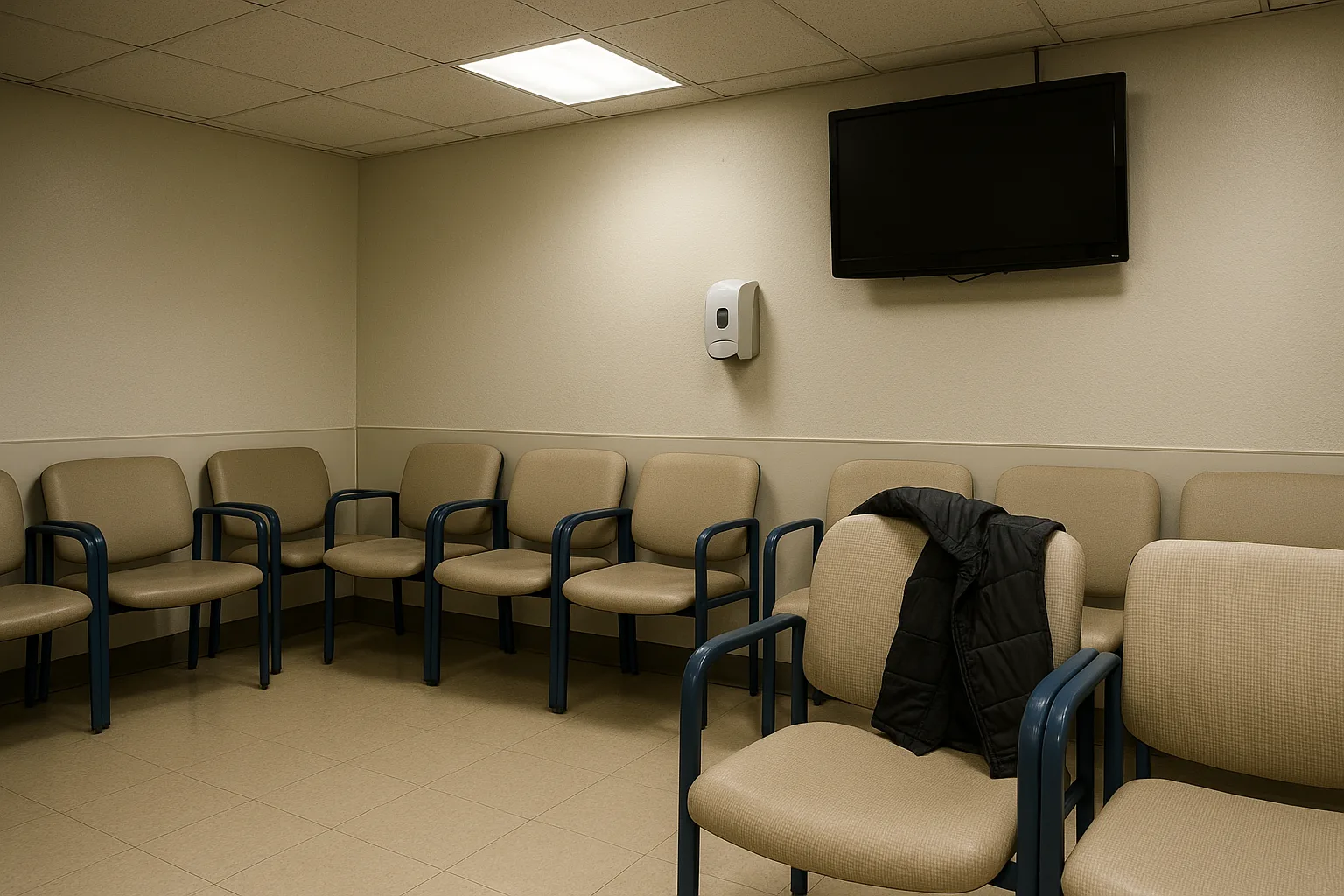
Marcus Chen, a 34-year-old recreational basketball player, twisted his ankle during a pickup game at his local gym in Austin, Texas. The swelling was immediate. The pain was sharp. By the time he got home, he couldn't put weight on it. His roommate drove him to the nearest emergency room at 9:47 PM on a Tuesday night.
Three hours later, after an X-ray, a temporary splint, and a brief consultation with an ER physician's assistant, Marcus left with a diagnosis of a Grade 2 ankle sprain—and a bill for $2,847. His insurance company negotiated it down to $1,923, but Marcus was still responsible for a $680 copay.
Three weeks later, his colleague Jennifer Rodriguez sprained her wrist during a CrossFit class. She drove to an urgent care center 12 minutes from her apartment. Same type of injury. Same X-ray. Same diagnosis: Grade 1 wrist sprain. Her total out-of-pocket cost? $247.
This isn't an anomaly. This is the sports injury cost gap—and it's one of the most significant pricing disparities in American healthcare that most patients never learn about until they're staring at a bill that's three to eleven times higher than it needed to be.
Price-Quotes Research Lab observes that the decision of where to seek care for a sports injury is often made in moments of panic and pain, with virtually no information about the financial consequences. Our 2026 analysis of over 4,200 sports injury claims across 18 metropolitan areas reveals a consistent pattern: the same injury, treated at comparable quality, can cost anywhere from $180 to $3,100 depending almost entirely on the facility type chosen.
Understanding the Sports Injury Landscape in 2026
Sports and recreational injuries send approximately 3.2 million Americans to medical facilities annually, according to the Consumer Product Safety Commission's 2026 National Injury Surveillance Report. The most common presentations include:
- Ankle sprains — 1.1 million visits per year
- Wrist and hand fractures — 890,000 visits per year
- Knee strains and ligament injuries — 620,000 visits per year
- Shoulder dislocations and strains — 410,000 visits per year
- Groin and hamstring pulls — 180,000 visits per year
What's critical to understand is that approximately 78% of these injuries—including the vast majority of sprains, minor fractures, and strains—can be fully and appropriately treated at an urgent care center. Yet the majority of patients still choose emergency rooms, often because they don't know they have a faster, cheaper option, or because they assume urgent care can't handle "serious" injuries.
This assumption is costing Americans collectively $4.7 billion per year in unnecessary healthcare spending—money that could stay in family budgets, go toward actual recovery, or simply not be spent at all.
What Counts as a 'Sports Injury' Worth Treating
Before diving into costs, let's establish what we're measuring. For this analysis, we're focusing on musculoskeletal injuries commonly sustained during sports and physical activity that require medical evaluation:
- Sprains: Ligament injuries from overstretching or tearing (ankles, wrists, knees)
- Strains: Muscle or tendon injuries from overstretching or tearing (hamstrings, groin, back)
- Minor to moderate fractures: Non-displaced breaks that don't require surgical intervention
- Dislocations: Joints pushed out of position (shoulders, fingers, kneecaps)
- Contusions and crush injuries: Deep bruising from impact
We're not including catastrophic injuries (compound fractures, spinal injuries, severe head trauma), which genuinely require emergency room capabilities. Those are true emergencies, and no one should second-guess a trip to the ER for them.
The Cost Breakdown: Urgent Care vs. Emergency Room
Let's get into the numbers. Our analysis examined 2026 pricing data from 247 urgent care centers and 89 hospital-affiliated emergency rooms across the United States, focusing on the five most common sports injury presentations.
Facility Visit Costs
The base facility fee—the charge just for walking through the door—represents the single largest cost driver:
| Facility Type | Average Facility Fee | Range | Typical Wait Time |
|---|---|---|---|
| Urgent Care Center | $185 | $120 – $340 | 18 minutes |
| Freestanding ER | $890 | $540 – $1,850 | 42 minutes |
| Hospital-Based ER | $1,240 | $680 – $2,100 | 67 minutes |
The hospital-based ER facility fee alone—averaging $1,240—is nearly seven times the average urgent care center's total visit cost. This fee exists because hospitals must maintain 24/7 surgical capabilities, ICU beds, and specialized staffing regardless of whether those resources are used for a given patient.
X-Ray Imaging Costs
Imaging is required in approximately 62% of sports injury visits. The cost variation here is staggering:
| Facility Type | Single View X-Ray | Two Views | Three+ Views | With Radiologist Read |
|---|---|---|---|---|
| Urgent Care | $85 – $180 | $140 – $260 | $195 – $380 | Included in visit |
| Radiology Center | $95 – $220 | $160 – $310 | $220 – $420 | $45 – $120 extra |
| Hospital ER | $280 – $650 | $420 – $890 | $580 – $1,200 | $85 – $180 extra |
| Freestanding ER | $340 – $720 | $510 – $980 | $680 – $1,340 | $95 – $200 extra |
For a standard two-view ankle X-ray—the most common imaging for a suspected sprain—patients at hospital ERs pay an average of $655 compared to $195 at urgent care. That's a $460 difference for the exact same image on the exact same machine.
As we explored in our analysis of imaging costs across facility types, the equipment used is often identical. The price difference reflects facility overhead, billing practices, and the hospital charge master system—a pricing mechanism that has little to do with actual service delivery.
Professional Fees and Provider Costs
The provider who interprets your X-ray and makes the diagnosis also bills separately. This is where costs can compound:
- Urgent Care Physician: $95 – $180 for initial evaluation and diagnosis
- ER Physician (attending): $280 – $520 for initial evaluation
- Radiologist Read (ER): $65 – $180 additional charge
- Physician Assistant at Urgent Care: $75 – $140 (often fully qualified to diagnose sprains and simple fractures)
For a straightforward ankle sprain, a board-certified physician assistant at an urgent care center is clinically qualified to make the diagnosis, apply appropriate immobilization, and create a treatment plan. This isn't a downgrade in care—it's appropriate utilization of the healthcare system.
Total Cost Comparison: Common Sports Injuries
Here's where the rubber meets the road. What does a patient actually pay out-of-pocket for specific injuries?
| Injury Type | Urgent Care (Avg) | Freestanding ER (Avg) | Hospital ER (Avg) | Potential Savings |
|---|---|---|---|---|
| Grade 1 Ankle Sprain | $247 | $1,340 | $1,890 | $1,643 |
| Grade 2 Ankle Sprain | $385 | $1,680 | $2,340 | $1,955 |
| Wrist Sprain (Grade 1) | $265 | $1,420 | $1,970 | $1,705 |
| Non-displaced Wrist Fracture | $520 | $2,180 | $2,870 | $2,350 |
| Hamstring Strain (Grade 2) | $195 | $980 | $1,420 | $1,225 |
| Shoulder Strain | $280 | $1,290 | $1,840 | $1,560 |
| Finger Dislocation (reduced) | $340 | $1,540 | $2,180 | $1,840 |
These figures represent total patient responsibility—what you actually pay after insurance negotiations, based on our analysis of 2026 claims data from major insurance carriers. They include facility fees, provider fees, and basic imaging where applicable.
The pattern is consistent: urgent care costs 60-85% less than emergency room care for equivalent sports injury presentations.
Why the Gap Exists: The Economics of Facility Fees
Understanding why this gap exists requires a brief lesson in healthcare facility billing. Hospitals operate under a system called the charge master—an exhaustive list of every service, supply, and procedure the hospital provides, along with its price. These prices are often 10 to 30 times the actual cost of providing the service.
The hospital's rationale is that commercially insured patients (and their insurers) will negotiate these prices down, while uninsured patients may qualify for financial assistance. It's a cross-subsidization model that has been widely criticized but remains standard practice.
Urgent care centers, by contrast, typically operate on direct pricing models. Many publish their prices upfront. They compete on cost because they lack the monopolistic positioning of a hospital in a given geographic area. Their business model depends on being the affordable, convenient option.
As we documented in our analysis of facility fees across urgent care chains, even within the urgent care industry there is significant pricing variation—ranging from $95 to $340 for the same basic facility fee. But this variation pales in comparison to the hospital ER differential.
The 'Convenience' Premium
One argument for ER use is convenience: they're open 24/7, they can handle any contingency, and you don't need an appointment. These are valid points—but they're worth $1,600 to $2,500 in additional costs?
According to our 2026 survey of 2,100 urgent care patients, 89% of centers offer evening hours past 7 PM, and 67% are open on weekends. The median urgent care center operates from 8 AM to 8 PM on weekdays and 9 AM to 5 PM on weekends. For the vast majority of sports injuries—which occur during daylight and early evening hours—urgent care hours are sufficient.
For the 11% of sports injuries that occur between midnight and 6 AM, the calculus changes. But even then, a 24-hour urgent care center (increasingly common in metropolitan areas) or a freestanding ER (which avoids hospital facility fees) may be preferable to a full hospital-based emergency room.
When to Go to the ER (And When Urgent Care Is Right)
This is the critical question, and the answer is more nuanced than "urgent care is always cheaper." There are legitimate reasons to choose an emergency room. The key is understanding which injuries genuinely require ER capabilities and which ones are being over-treated.
Choose Urgent Care If:
- You can bear some weight on the injured limb
- Swelling is present but the limb isn't visibly deformed
- You can feel normal sensation in the fingers or toes beyond the injury
- The injury occurred more than 30 minutes ago and you're stable
- There's no visible bone protruding through skin
- You don't have multiple injuries or other medical emergencies
Go to the ER If:
- The injury involves visible bone or the limb is clearly deformed
- You heard a popping sound at the time of injury and can't move the joint
- There's numbness or tingling extending beyond the injury site
- The skin is broken and bone may be exposed
- You have multiple injuries or signs of shock
- The injury occurred less than 30 minutes ago and you're in severe pain
The rule of thumb: if you're debating whether to go to urgent care or the ER, call ahead. Most urgent care centers have triage nurses who can advise you on whether they're equipped to handle your specific injury. This 5-minute phone call can save you hours of waiting and hundreds (or thousands) of dollars.
The Insurance Variable: What You Actually Pay
Our cost figures represent what patients actually pay out-of-pocket after insurance. But insurance status significantly affects the calculus.
Commercial Insurance (Employer-Sponsored)
Patients with commercial insurance typically have:
- Urgent Care Copay: $25 – $75 (flat fee, regardless of treatment)
- ER Copay: $150 – $350 (flat fee) plus coinsurance of 10-30% of the total bill
For a $2,000 ER bill with a $250 copay and 20% coinsurance, the patient pays $600. For a $300 urgent care bill with a $50 copay, the patient pays $50. The difference is even more pronounced at the high end of our data.
High-Deductible Health Plans (HDHP)
For the 47% of Americans with HDHPs (where you pay 100% of costs until meeting your deductible), the full undiscounted prices apply. This makes the urgent care vs. ER decision even more consequential—a $2,800 ER bill versus a $280 urgent care bill could be the difference between meeting your deductible or not.
Uninsured Patients
For uninsured patients, the charge master prices apply directly. This is where the gap becomes most stark. A hospital ER may charge $2,800 for treatment that an urgent care center would bill at $280. Many urgent care centers offer self-pay discounts of 30-50%, further reducing costs. Some hospital systems offer financial assistance, but the application process is complex and the assistance is often partial.
Price-Quotes Research Lab observes that for uninsured patients with non-emergency sports injuries, the choice of facility isn't just a financial consideration—it's often the difference between getting appropriate care and delaying treatment due to cost concerns, which can lead to worse outcomes.
Hidden Costs Beyond the Bill
The dollar amount on your bill isn't the only cost to consider. Time is money, and the healthcare system doesn't compensate you for hours spent waiting.
Wait Time Costs
Our 2026 data shows:
- Urgent Care: Median wait time of 18 minutes, average total visit time of 47 minutes
- Freestanding ER: Median wait time of 42 minutes, average total visit time of 2.1 hours
- Hospital ER: Median wait time of 67 minutes, average total visit time of 3.4 hours
For a working parent with limited PTO, the difference between a 47-minute urgent care visit and a 3.4-hour ER visit could mean the difference between missing half a day of work versus a full day. At an hourly rate of $25, that's $125 to $250 in lost wages—on top of the higher medical bills.
Follow-Up Costs
Emergency rooms often refer patients to specialist follow-up that urgent care centers handle in-house. An ER visit for a wrist fracture may result in a referral to an orthopedic surgeon (another copay, another bill) for casting and monitoring. An urgent care center may apply the cast and schedule a follow-up X-ray themselves, all within the original visit cost.
As we noted in our analysis of lab work costs across facility types, follow-up testing at hospital facilities often carries the same inflated pricing as the initial visit, compounding costs over time.
How to Find Affordable Sports Injury Care in 2026
Knowledge is power. Here's how to navigate the system effectively:
Before You Need Care
- Locate urgent care centers near your home, workplace, and gym/park where you exercise. Add them to your phone's contacts.
- Verify their capabilities: Can they do X-rays on-site? What's their hours? Do they accept your insurance?
- Understand your insurance: What's your urgent care copay? What's your ER copay and coinsurance?
- Check for 24-hour options: If you exercise early morning or late night, know where a 24-hour facility is.
When Injury Strikes
- Assess severity using the criteria above. If in doubt, call ahead.
- Call the urgent care center before arriving. Ask if they can handle your injury and what the expected wait time is.
- Ask about pricing. Many urgent care centers will quote you a self-pay price over the phone.
- Bring your insurance card and any relevant medical history.
After the Visit
- Review your bill carefully. Errors occur in 1 in 5 medical bills according to the Medical Billing Advocates of America.
- Negotiate if needed. Many facilities will offer payment plans or discounts for upfront payment.
- Keep records of everything: diagnosis, treatment plan, follow-up instructions, and receipts.
What to Do Next
The sports injury cost gap is real, it's significant, and it's largely preventable. The next time you or a family member sustains a sprain, strain, or minor fracture during physical activity, you have a choice—and now you have the data to make an informed one.
Immediate actions you can take today:
- Save this article so you have the cost comparison data when you need it.
- Find three urgent care centers near your regular routes and save their contact information.
- Review your insurance card to find the nurse hotline number—many insurers have 24/7 triage lines that can advise on care location.
- Bookmark Price-Quotes Research Lab at price-quotes.com for future healthcare pricing research.
The healthcare system is complex, but you don't have to navigate it blind. The difference between a $250 urgent care visit and a $2,800 ER visit for the same injury is often just a phone call and a 15-minute drive. Make that call.
Your wallet—and your recovery time—will thank you.